JavaScript
A client library for building Dapr apps in JavaScript and TypeScript. This client abstracts the public Dapr APIs like service to service invocation, state management, pub/sub, secrets, and much more, and provides a simple, intuitive API for building applications.
Installation
To get started with the JavaScript SDK, install the Dapr JavaScript SDK package from NPM:
npm install --save @dapr/dapr
Conversation
Converse with LLMs using DaprClient.conversation over HTTP or gRPC, including tool calling, structured output, PII scrubbing, prompt cache retention, and token usage statistics. These guides target JavaScript SDK 3.19.0 or later.
Follow the Conversation how-to guide to get started. See client usage for runtime requirements and request options, and tool calling for a complete function-call round trip.
Jobs
Schedule one-time, interval-based, or cron-based jobs and receive their callbacks using DaprClient.jobs and DaprServer.jobs. Jobs requires JavaScript SDK 3.19.0 or later, Dapr runtime 1.16 or later, and a running Scheduler service.
Follow the Jobs how-to guide, read the client and callback usage guidance, or build calendar-based schedules with the cron builder.
Configuration
Read application settings and subscribe to changes with DaprClient.configuration. The configuration how-to guide and client usage guidance cover selected or all keys, store-specific metadata, response handling, and subscription cleanup using @dapr/dapr 3.19.0 or later. Configuration operations require gRPC in the JavaScript SDK.
State Management
Save, retrieve, and delete application state with DaprClient.state. The SDK supports bulk operations, ETags, consistency options, transactions, TTL metadata, custom serialization, and state queries over HTTP or gRPC.
Follow the state management how-to guide, read the client usage guidance for protocol-specific behavior, or learn how to query state. These guides target JavaScript SDK 3.19.0 or later.
Publish and subscribe
Publish single events or batches over HTTP or gRPC, receive programmatic server callbacks, or subscribe through a client-initiated gRPC stream without an application server.
The publish and subscribe guide covers JavaScript SDK 3.19.0 or later, including routing, acknowledgements, dead-letter topics, serialization, error handling, and subscription cleanup.
Service invocation
Call services over HTTP or gRPC and receive invocations through DaprServer or an existing HTTP application.
The service invocation guide covers JavaScript SDK 3.19.0 or later, including headers, query parameters, callback responses, serialization, error handling, and transport limitations.
Secrets
Retrieve individual and bulk secrets with DaprClient.secret. Follow the Secrets how-to guide for setup, or read the client usage guidance for metadata, response shapes, and HTTP/gRPC differences. The guides target JavaScript SDK 3.19.0 or later.
Binary Store
Store, retrieve, stream, and delete binary files with DaprClient.binaryStore over HTTP or gRPC. Binary Store requires Dapr runtime 1.19 or later and JavaScript SDK 3.19.0 or later.
Follow the Binary Store how-to guide to get started, or read the client usage guidance for configuration, streaming, cancellation, and error handling.
Cryptography
Encrypt and decrypt messages and files with DaprClient.crypto over HTTP or gRPC in @dapr/dapr 3.19.0 or later. Prefer gRPC for large payloads and production streaming.
Follow the Cryptography how-to guide to configure a component and encrypt data. Read the client usage guidance for supported inputs, ciphers, key references, streaming, and limitations.
Search
Manage indexes and index, retrieve, delete, and query JSON documents with DaprClient.search over HTTP or gRPC. Search requires Dapr runtime 1.19 or later and JavaScript SDK 3.19.0 or later.
Follow the Search how-to guide to get started, or read the client usage guidance for query options, pagination, write acknowledgements, cancellation, and errors.
Vector
Store precomputed embeddings and run similarity searches with DaprClient.vector over HTTP or gRPC. Vector requires a Vector-capable Dapr runtime from the 1.19 release line or later and JavaScript SDK 3.19.0 or later.
Follow the Vector how-to guide to get started, or read the client usage guidance for configuration, indexing acknowledgements, cancellation, and error handling.
Structure
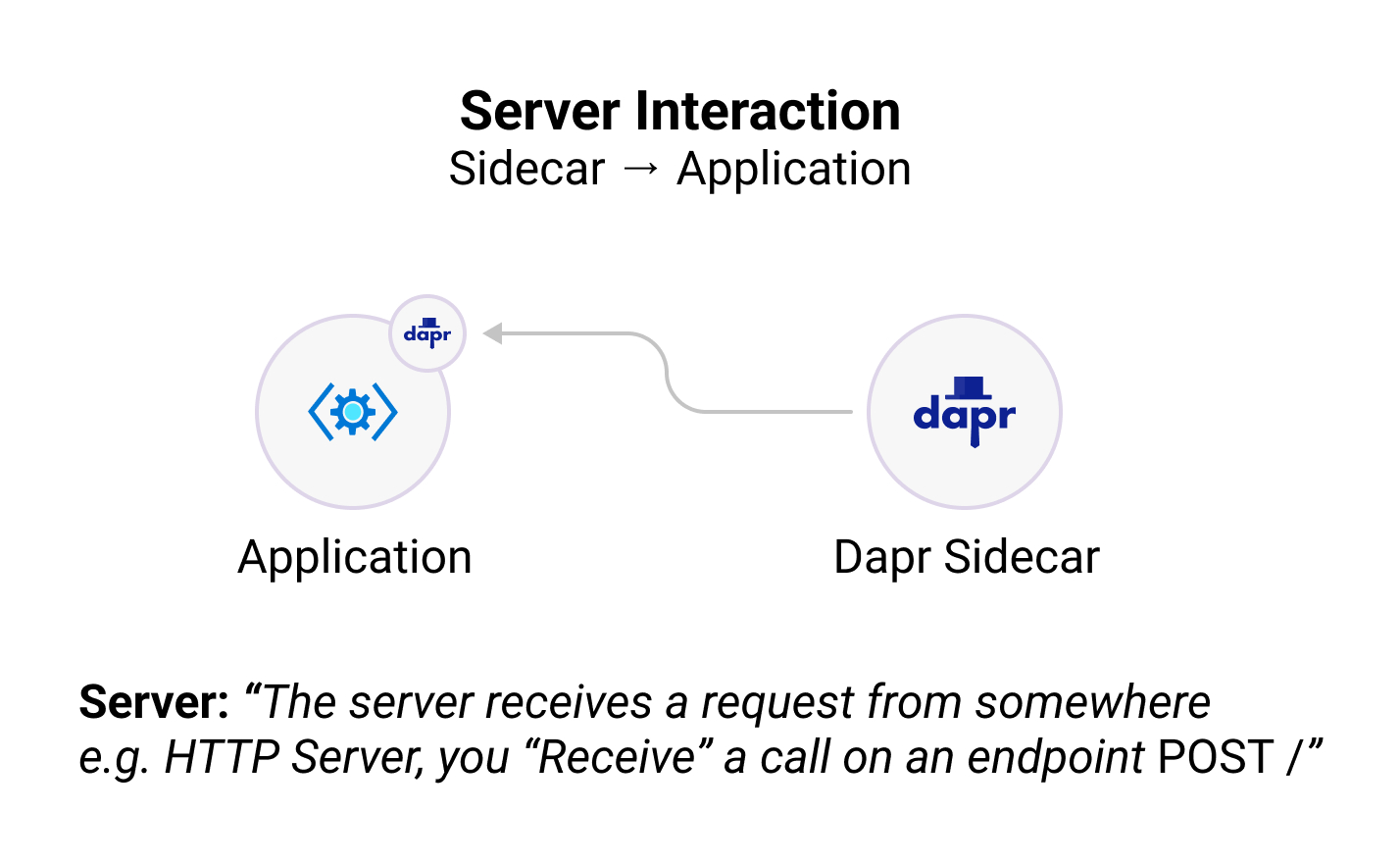
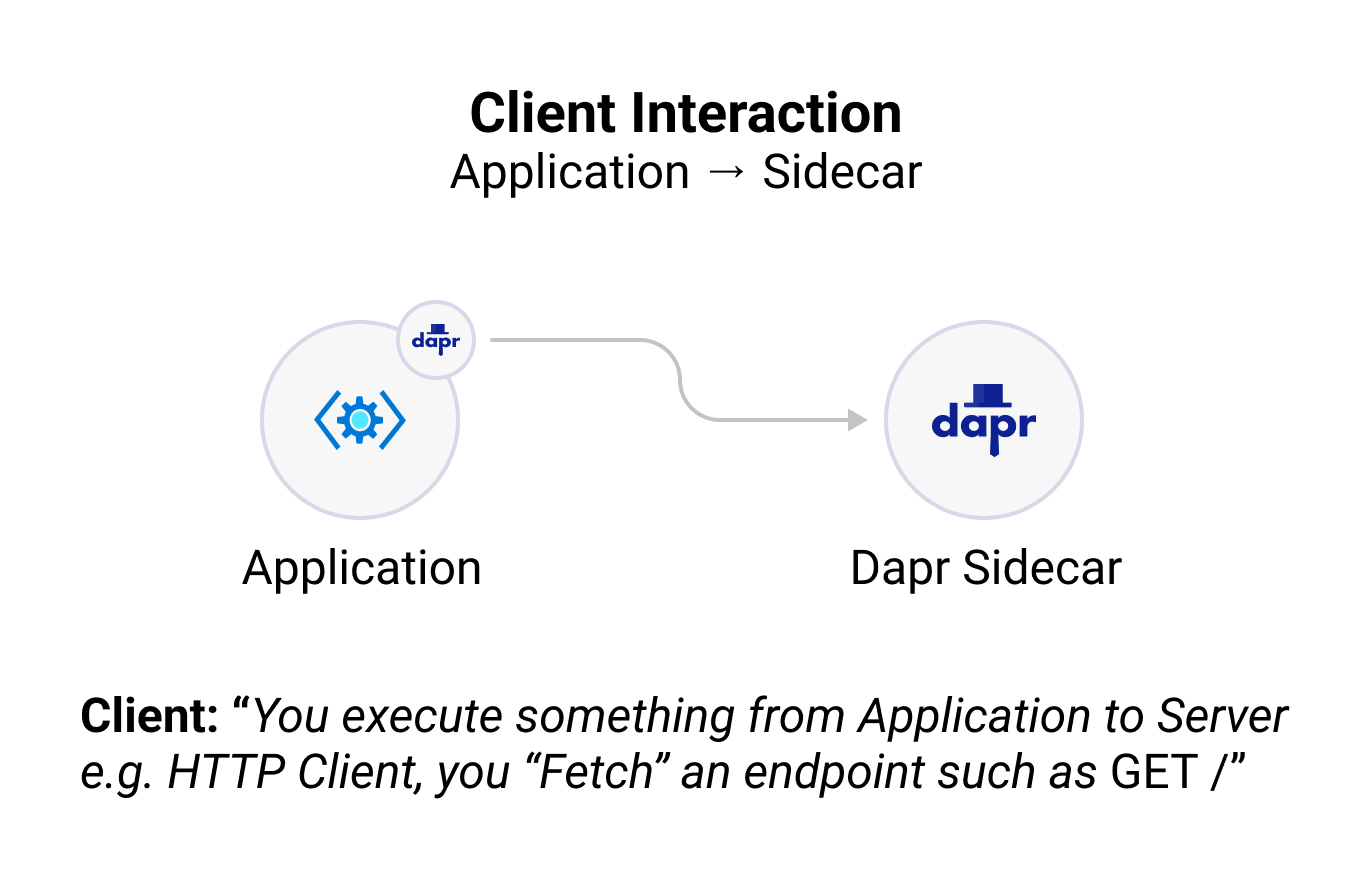
The Dapr JavaScript SDK contains two major components:
- DaprServer: to manage all Dapr sidecar to application communication.
- DaprClient: to manage all application to Dapr sidecar communication.
The above communication can be configured to use either of the gRPC or HTTP protocols.
 |  |
Getting Started
To help you get started, check out the resources below: